Ridge Tiles and Re-Pointing: What York Homeowners Should Know
Look up at the top of your roof, along the very peak, and you'll see the ridge tiles capping the join. The mortar holding them is easy to forget about, right up until a chunk of it lands in your garden.
Ridge tiles and their pointing do a quiet, important job, and York's hard winters are tough on them. This is a homeowner's guide to what they are, what goes wrong, and what to watch for.
The quick answer: Ridge tiles cap the top of your roof and are traditionally bedded on mortar. That mortar cracks and crumbles over time, especially with York's frosts, and re-pointing or re-bedding is a roofer's repair job. Spotting the warning signs early saves trouble.
1. What ridge tiles do
Ridge tiles are the curved or angled tiles that sit along the very top of the roof, sealing the line where two slopes meet. Without them, wind and rain would drive straight into the gap and down into your loft.
On many York homes, especially the clay pantile roofs, the ridge is finished with half-round tiles bedded in mortar. That mortar bed is what holds them steady and keeps the weather out, and it's the part that ages fastest.
2. What re-pointing and re-bedding mean
Re-pointing means raking out the old, failed mortar and replacing it to seal the joints again. Re-bedding goes further, lifting the ridge tiles and setting them back down on a fresh bed of mortar.
These are repair jobs for a roofer, not a cleaning task, and it's worth being clear about that. A roof clean gets your tiles clear of moss, but crumbling ridge mortar needs proper repair work to put right.
3. Why York's weather is hard on ridge mortar
Mortar's enemy is the freeze-thaw cycle. Water seeps into tiny cracks, freezes, expands and forces the cracks wider, and every hard frost makes it worse. York gets cold winters with real frosts, so ridge mortar here takes a proper beating.
Add the damp. The Vale of York is misty and dew-heavy, so the mortar rarely gets a long dry spell to recover. Damp mortar going through repeated freezes crumbles far faster than it would in a warmer, drier spot.
4. Warning signs to watch for
You don't need to climb up to spot trouble. A lot of the tell-tale signs show up from the ground or on the patio below. The trick is knowing what you're looking at.
Keep an eye out for these, and if you spot them it's worth getting the ridge looked at by a roofer:
- Mortar on the ground: Crumbs or chunks of grey mortar in the gutter or on the path below the ridge.
- Gaps in the ridge line: Visible dark gaps where mortar has fallen out from between the tiles.
- A tile out of line: A ridge tile that's slipped, tilted or sits proud of its neighbours.
- Damp in the loft: Staining or drips near the ridge inside the roof space after rain.
- Heavy moss at the ridge: Thick growth along the top can hold damp against already weak mortar.
5. How cleaning and ridge condition connect
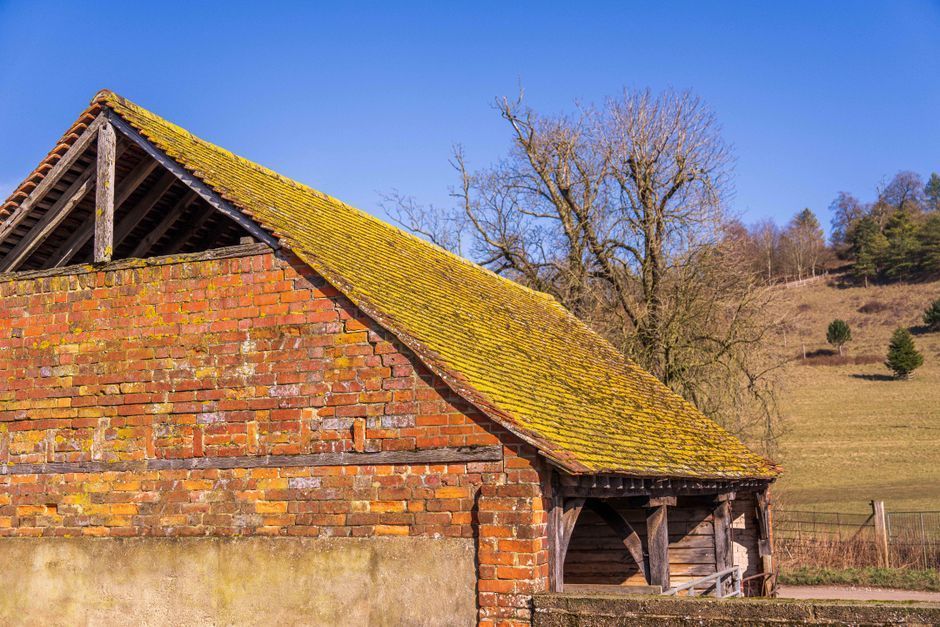
Here's where a roof clean fits in. Moss loves to gather along the ridge, and as it grows it holds damp right against the mortar joints, which speeds up the crumbling.
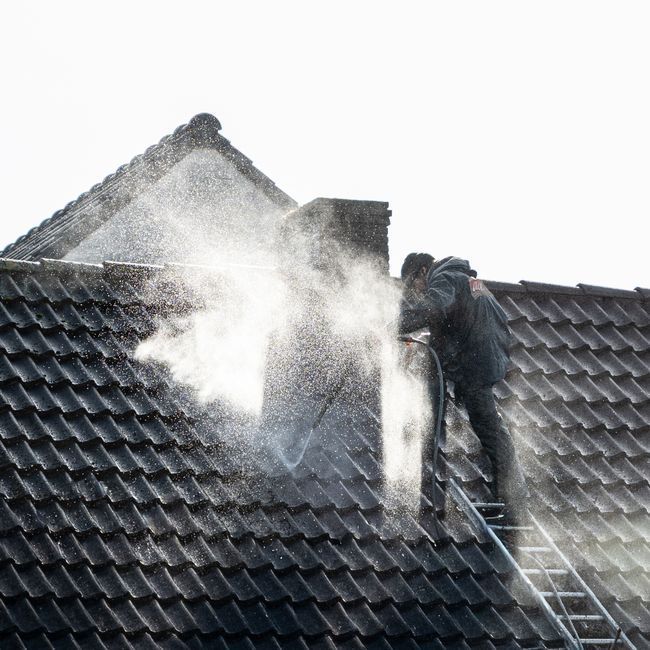
Soft washing clears that moss with a low-pressure treatment that kills it at the root, so it stops trapping wet against the ridge. It won't repair failed mortar, but it removes one thing that's making the mortar worse, and while we're up there we can flag any loose tiles or gaps we spot.
6. Cleaning first, repairs in the right order
If your ridge mortar is clearly failing, the repair comes first, done by a roofer. There's no sense cleaning around tiles that are about to be lifted and re-bedded anyway.
Where the ridge is sound but mossy, a clean keeps it that way and buys the mortar an easier life. Getting the order right, repairs when they're needed and cleaning to protect what's sound, is how you look after a roof properly.
Frequently Asked Questions
Do you re-point or re-bed ridge tiles?
No, that's a roofer's repair job. We clean roofs and clear moss, and we'll flag any loose or slipped ridge tiles we notice while we're up there.
How do I know if my ridge needs re-pointing?
Look for crumbs of mortar below the ridge, dark gaps between the tiles, or a tile that's slipped. Those point to failing mortar worth getting checked.
Does moss damage ridge mortar?
It doesn't help. Moss along the ridge holds damp against the joints, and in York's frosts that trapped wet speeds up how fast the mortar crumbles.
Should I clean the roof before repairs?
If the mortar's clearly failing, do the repair first. If the ridge is sound but mossy, cleaning protects it and slows further damage.
Can you tell me if my ridge is a problem?
We can point out what we see during a clean, but a proper diagnosis and any re-bedding should come from a roofer.
Moss building up along your ridge?
Ben's Roof Cleaning cleans roofs and clears moss across York and North Yorkshire, with over 15 years of experience, and we'll flag anything we spot up top. Get in touch or call 01904 221291
for a free, no-obligation quote.
Know your ridge before it becomes a leak
The ridge is the highest, most weather-beaten line on your roof, and its mortar quietly wears down through every York winter. Knowing the warning signs means you catch trouble before water finds its way in.
Keep the moss off to protect what's sound, call a roofer when the mortar's gone, and your ridge keeps doing its job at the top of the house.