Roof Cleaning for York's Period and Conservation-Area Homes
If your home in York predates the war, and plenty do, your roof is part of what makes it worth living in. Those weathered tiles and that soft, aged colour are hard to fake and impossible to buy new. Which is exactly why cleaning them needs a careful hand.
Period roofs reward the right approach and punish the wrong one. A clean that suits a modern estate can wreck a Victorian slate or a Georgian pantile in an afternoon. Here is how to clear moss and grime off an older York roof without stripping away the thing that makes it special.
The quick answer: Period and conservation-area roofs in York should only ever be soft washed. Low pressure and a biocide treatment clear the moss without cracking fragile tiles or forcing water under the laps. If the building is listed, check what is allowed before any work starts.
1. What makes a period roof different
An old roof has already had a long life. The tiles have swelled and shrunk through thousands of hot summers and hard frosts, the nails holding them have rusted, and the mortar at the ridge has gone soft. Everything up there is more fragile than it looks from the pavement.
Then there are the materials. Hand-made clay pantiles, natural Welsh slate, and split stone flags were never built to take modern pressure washing. They were made to weather slowly over generations. A gentle clean works with that. A hard one fights it, and the roof loses.
2. York's conservation area is bigger than most
York has one of the largest conservation areas in England. It covers the whole historic core inside and around the city walls and reaches well beyond it. If you live in Bootham, Clementhorpe, or the streets around Micklegate, there is a good chance your home sits inside it.
That status protects the look of the city. It does not usually stop you cleaning your roof, but anything that changes the roof's appearance or fabric, like recoating or swapping tiles, may need permission. A clean that simply lifts the moss and leaves the original tiles where they are stays well on the safe side of that line.
3. The problem with pressure washing old tiles
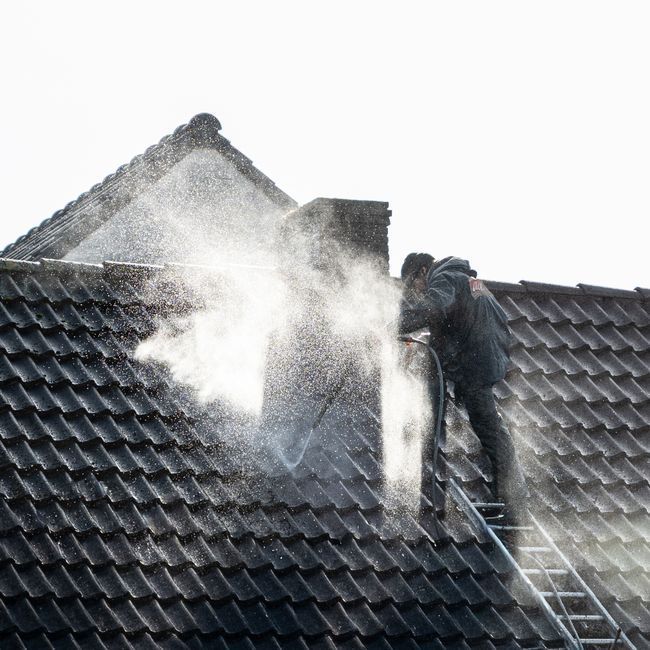
Pressure washing looks satisfying. The moss peels off in sheets and the before-and-after is striking. On an old roof, that show is the sound of money leaving your wallet.
The jet strips the fired skin off clay and the natural face off slate, leaving the tile open to frost. It blasts out the bedding mortar. It drives water deep under the laps and into timbers that may already be a century old. I have seen roofs that needed thousands in repairs within two years of a cheap pressure wash. The moss came back faster too, because the roughened surface held even more water than before.
4. Lichen, moss and the look of an old roof
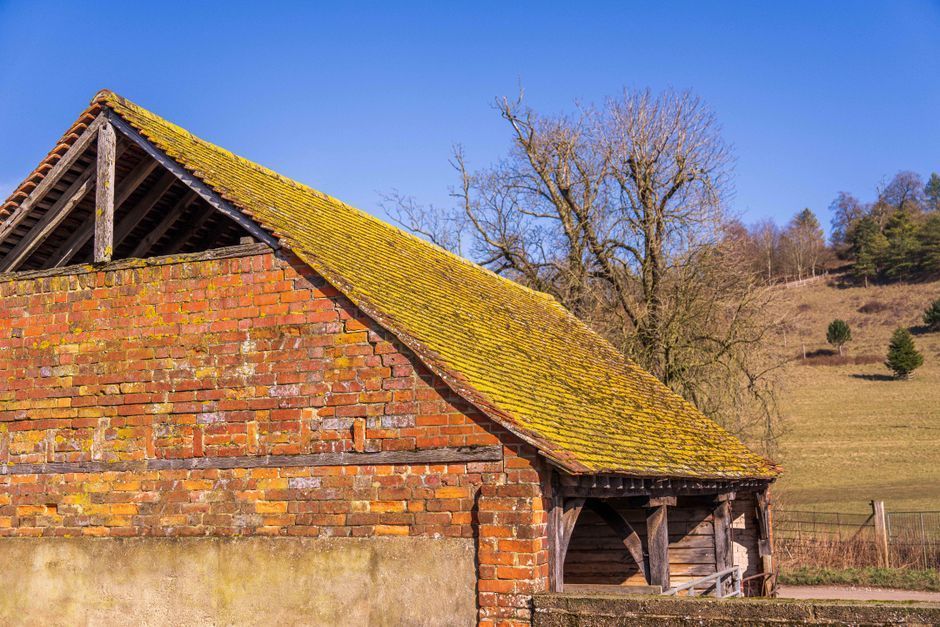
Not every bit of growth needs to go, and this is where judgement earns its keep. A light bloom of lichen on a stone roof is part of its character and does little harm. Thick moss is another matter. It holds water against the tiles, blocks the flow into the gutters, and creeps under the laps as it spreads.
The aim on a period roof is balance. Clear the damaging growth, protect the tiles, and keep the mellow, lived-in look that suits the building. Scrubbing an old roof back to a hard, uniform finish just makes it look wrong on a street of aged ones.
5. Listed buildings: check before you clean
If your home is listed, and York has hundreds of listed buildings, the rules tighten. Work that affects the character of a listed building can need listed building consent, and the roof is part of that character.
A simple soft wash that removes moss without altering the tiles is usually the least intrusive choice. Still, it pays to ask the council or a conservation officer if you are unsure, especially before anything more involved than cleaning. Getting it wrong on a listed building is a legal problem, not just an awkward conversation.
6. What a careful clean looks like
On a period roof the work is slow and deliberate. The moss is treated and lifted by hand and with low-pressure spray, never blasted. Loose tiles get spotted and flagged rather than knocked further out of place. The gutters are cleared of everything that comes down. Then the biocide treatment keeps regrowth slow for a good while after.
It is less of a spectacle than a pressure wash. It is also the difference between a roof that lasts another fifty years and one that starts leaking by February.
Signs a period roof in York is asking for attention:
- Thick moss packed into the tile joints: it is holding water right where you do not want it.
- Green or black staining spreading down the slope: algae and moss are taking over the surface.
- Bits of tile or mortar sitting in the gutters: the roof is shedding material and needs a look.
- Damp patches on upstairs ceilings: water may already be getting past worn or slipped tiles.
- Slipped or lifted tiles you can see from the ground: old fixings are failing and letting tiles move.
Frequently Asked Questions
Will cleaning damage my old tiles?
Not if it is done gently. Soft washing uses low pressure and a treatment that kills growth chemically, so nothing gets forced or knocked loose. Pressure washing is the method that damages old tiles, not cleaning itself.
Do I need permission to clean a roof in York's conservation area?
Cleaning that just removes moss and keeps the original tiles usually does not. Recoating, painting, or replacing tiles might. If in doubt, a quick check with the council settles it before you commit.
Is it worth cleaning a roof that already looks old and weathered?
Yes, if there is thick moss holding water and blocking drainage. You can clear the damaging growth while keeping the aged look, which is the balance a good clean aims for.
How long before the moss comes back on a period roof?
A biocide treatment keeps it slow, often for a few years, though older porous tiles hold more water and see growth return sooner than smooth modern ones. A yearly gutter check helps you catch it early.
My roof has lichen, not moss. Does that need removing?
Light lichen on stone or slate is mostly cosmetic and part of the character. Heavy growth that traps water is worth clearing. A good cleaner will tell you honestly which one you have.
Own a period or listed home in York?
Ben's Roof Cleaning works carefully on older and conservation-area roofs across York and North Yorkshire, with over 15 years of experience. Get in touch or call 01904 221291
for a free, no-obligation quote.
Keeping the character and losing the moss
An old York roof is worth protecting, and the way to protect it is to leave it as intact as possible while getting rid of what harms it. Gentle cleaning does that. It clears the moss that traps water and blocks drainage, spots the tiles that need a repairer's eye, and leaves the aged look that belongs on a house that has stood for a century or more.